



Ever been stuck listening to someone drone on about features, features, features? You nod politely, but honestly, you’re thinking, “So what? How does this actually help *me*?” That’s the power (and necessity) of being benefit-oriented. It’s about flipping the script and speaking directly to what customers (or heck, even your boss!) really care about.
What Does “Benefit-Oriented” Really Mean?
At its core, being benefit-oriented means focusing on the positive outcomes or advantages that a product, service, or idea provides to the end-user. Instead of rattling off a laundry list of technical specs or functions, you’re highlighting how those elements solve problems, improve lives, or fulfill needs. It’s about tapping into that fundamental human question: “What’s in it for me?” And answering it clearly and compellingly.
Features Vs. Benefits: A Tale of Two Approaches
Let’s break this down with a classic example. Imagine you’re selling a new smartphone. A feature might be “128GB of storage.” Okay, cool. But a benefit? That’s “Store thousands of photos and videos without ever worrying about running out of space, keeping your memories safe and accessible.” See the difference? One’s a fact; the other’s a promise fulfilled. It’s the emotional connection that gets people hooked. It speaks to their desires and needs.
Why Benefits Matter More Than Features (Seriously!)
You know what? People don’t buy features; they buy solutions. They buy the feeling of relief, the promise of a better life, or the satisfaction of achieving a goal. Here’s why a benefit-oriented approach is so crucial:
- It Grabs Attention: In a world saturated with information, benefits cut through the noise by directly addressing the audience’s needs.
- It Creates Emotional Connection: Benefits tap into people’s desires, fears, and aspirations, forging a stronger bond than dry technical details ever could.
- It Drives Decision-Making: When people understand the tangible value they’ll receive, they’re much more likely to take action.
- It Builds Loyalty: Consistently delivering on promised benefits fosters trust and turns customers into advocates.
Think about it: you’re not buying a car just for its engine size (feature!). You’re buying the freedom of the open road, the safety for your family, or the status it represents (benefits!).
Okay, I’m Sold. How Do I Become Benefit-Oriented?
Glad you asked! Transitioning to a benefit-oriented mindset is a process, but here are some actionable steps to get you started:
Step 1: Know Your Audience Inside and Out
This sounds obvious, but it’s the foundation of everything. You need to deeply understand your target audience’s pain points, needs, desires, and aspirations. What keeps them up at night? What are their biggest challenges? What are their dreams? Creating detailed buyer personas is an excellent way to solidify this understanding. Remember, context is key. A benefit that resonates with a Gen Z audience might completely miss the mark with Baby Boomers.
Step 2: Translate Features Into Tangible Advantages
For every feature your product or service offers, ask yourself, “So what?” Then, dig deeper to uncover the underlying benefit. Use the “features > advantages > benefits” framework. Let’s say you’re selling project management software.
Feature: Gantt chart functionality.
Advantage: Visualize project timelines and dependencies.
Benefit: Keep projects on track, deliver on time, and avoid costly delays, ultimately boosting team productivity and client satisfaction.
Step 3: Use Strong, Evocative Language
Ditch the jargon and technical terms. Opt for words that paint a vivid picture of the positive outcomes your audience will experience. Instead of “Increase efficiency,” try “Unlock hours of productive time.” Replace “Reduce costs” with “Save thousands of dollars.” The goal is to make the benefits feel real and attainable.
Step 4: Focus on the “You”
Make your messaging customer-centric. Use “you” and “your” frequently to directly address the audience and make the benefits feel personal. Instead of saying “Our software streamlines workflows,” try “Your workflows will be streamlined, freeing you up to focus on what matters most.”
Step 5: Tell Stories
People connect with stories on a deeper level than they do with facts and figures. Share customer testimonials, case studies, or even hypothetical scenarios that illustrate the benefits of your product or service in action. Think about those infomercials – cheesy as they are, they often paint a compelling picture of how a product can improve your life. You can learn a thing or two from them if you look past all the “but wait, there’s more!”
Step 6: Get Feedback and Iterate
Constantly solicit feedback from your audience to see if your messaging is resonating. A/B test different headlines, descriptions, and calls to action to see what generates the best results. Marketing is never “set it and forget it.” It’s about continuous improvement.
Examples in Action: Benefit-Oriented Marketing That Works
Let’s look at some real-world examples of companies that nail the benefit-oriented approach:
- Nike: They don’t just sell shoes; they sell the feeling of empowerment, athleticism, and achieving your personal best. Their “Just Do It” campaign is a masterclass in tapping into aspirational benefits.
- Apple: They don’t focus on processor speeds; they emphasize the seamless user experience, the intuitive design, and the ability to effortlessly create and connect.
- Amazon Prime: They don’t just offer fast shipping; they offer convenience, time savings, and access to a vast library of entertainment.
- Tesla: It’s not just an electric car; it’s a statement about sustainability, innovation, and driving the future.
Notice the common thread? These companies sell a lifestyle, an identity, a solution to a problem. The features are just the tools they use to deliver on those promises.
Common Pitfalls to Avoid (Because We All Make Mistakes)
Even with the best intentions, it’s easy to slip up. Here are some common mistakes to watch out for:
- Assuming Your Audience Knows What You’re Talking About: Don’t use industry jargon or technical terms without explaining them clearly. Remember, you’re the expert, not them.
- Being Too Vague: Benefits should be specific and measurable. Instead of “Improve your business,” try “Increase your sales by 20% in the next quarter.”
- Exaggerating or Making False Claims: Overpromising and underdelivering is a surefire way to lose trust and damage your reputation.
- Forgetting the Features Altogether: While benefits are paramount, features still matter. They provide the proof and credibility to back up your claims. A balanced approach is key.
The ROI of Benefit-Oriented Communication: Showing, Not Just Telling
So, what’s the real payoff of shifting to a benefit-oriented approach? Increased sales, improved customer engagement, stronger brand loyalty, and ultimately, a more successful and sustainable business. It’s about creating a connection with your audience that goes beyond the transactional and taps into their deepest desires and aspirations. In fact, one study showed that marketing messages emphasizing benefits over features saw a 30% higher conversion rate. Think about it: that’s 30% more people clicking “buy,” signing up, or taking whatever action you want them to take, just because you showed them how it would improve their lives.
Benefit-Oriented in the Real World: Beyond Marketing
You know, this isn’t just for marketers. Being benefit-oriented applies everywhere! Think about presenting an idea to your boss. Don’t just list the tasks involved (the features). Instead, highlight how it will increase efficiency, reduce costs, or improve team morale (the benefits). When you sell the outcome, not just the process, you’re much more likely to get a “yes.” Now, doesn’t that sound beneficial?
In Conclusion: Focusing on the “Why” to Drive Action
Being benefit-oriented is more than a marketing technique; it’s a fundamental principle of effective communication. By focusing on “what’s in it for me,” you can capture attention, create emotional connections, and drive action. It’s about understanding your audience’s needs and desires and then clearly and compellingly demonstrating how your product, service, or idea can help them achieve their goals. So go ahead, flip the script, and start selling benefits. Your audience – and your bottom line – will thank you for it.
FAQ Section
DISCLAIMER
The information provided in this article is for general informational purposes only and does not constitute professional advice. While we strive to provide accurate and up-to-date information, we make no representations or warranties of any kind, express or implied, about the completeness, accuracy, reliability, suitability, or availability with respect to the article or the information, products, services, or related graphics contained in the article for any purpose. Any reliance you place on such information is therefore strictly at your own risk. Always seek the advice of a qualified professional for any specific questions or concerns you may have.
Categories
- 3D Printer (517)
- Automatic Mugs (426)
- Cleaning Appliances (504)
- Electric Bikes (214)
- Electric Scooters (456)
- Electronic Gadgets (183)
Archives
About Team Ibuyem
View all posts by Team IbuyemProduct Gallery
-
Meian Smart Home Doorbell Wireless Security Doorbell IP65 Waterproof Outdoor Door Bell 60 Songs 5 Volume Adjustable Chime Kit
Rated 4.79 out of 5$14.00 – $30.00Price range: $14.00 through $30.00
-
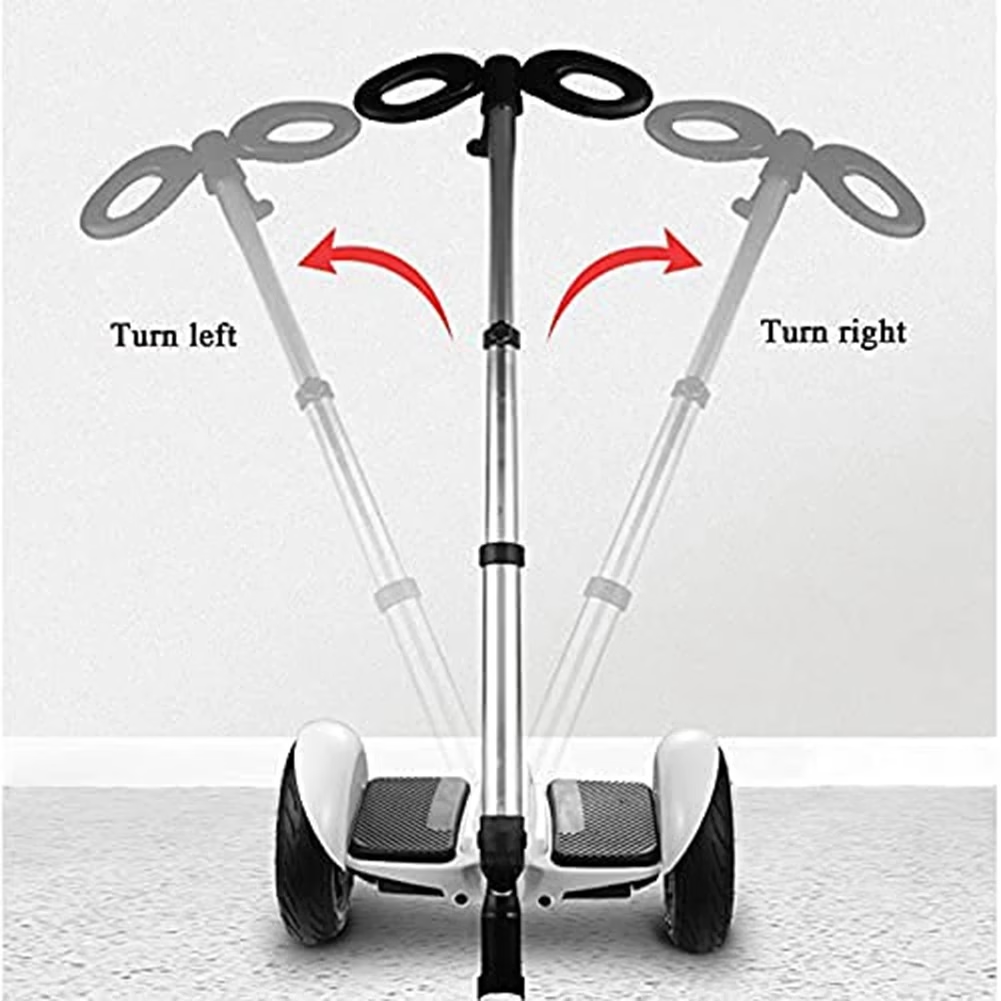 ABHS-Handlebar Suitable For Segway Ninebot Minipro Minilite Hoverboard Adjustable Three-In-One Function Pressure Handle
$61.00
ABHS-Handlebar Suitable For Segway Ninebot Minipro Minilite Hoverboard Adjustable Three-In-One Function Pressure Handle
$61.00
-
 Modern Fashion 2 Wheel Smart Aluminum Hooverboard Self Balancing Scooter Kids Adults Electric Balance Scoter
$320.00
Modern Fashion 2 Wheel Smart Aluminum Hooverboard Self Balancing Scooter Kids Adults Electric Balance Scoter
$320.00

 Robot Vacuums
 Steam Cleaner
 Window Robots
 Self Stirring Mugs
 Self Heating Mugs
 Air Purifier
 Dehumidifier
 Diffuser
 Humidifier
 Panoramic Camera
 Solar Camera
 Window Door Sensor
 Baby Monitor
 Small Cameras
 Electric Bike
 Electric Bike Motor
 Electric Scooter
 Electric Skateboard
 Hoverboard
 3D Printers
 3D Printer Filament

Recent Comments